How to Pack for a Move Efficiently (Without Creating Extra Work)
Packing efficiently isn’t about moving faster.
It’s about avoiding the kind of packing that creates more work later — on moving day, during unloading, or when you’re exhausted and trying to find what you need.
Most inefficient packing feels productive in the moment. Boxes are getting filled. Paper is being used. Progress looks visible.
But efficiency isn’t about motion. It’s about order.
This article explains how to pack in a way that reduces wasted time, prevents damage, and keeps the move itself moving.
Why packing efficiency matters more than speed
Packing sets the conditions for everything that follows.
When packing is scattered or rushed, movers slow down, items get handled more than necessary, and decisions bleed into moving day. Even a well-organized move can lose hours correcting inefficient packing.
Efficient packing doesn’t feel rushed. It feels contained.
What actually slows packing down
Most packing inefficiency comes from fragmentation.
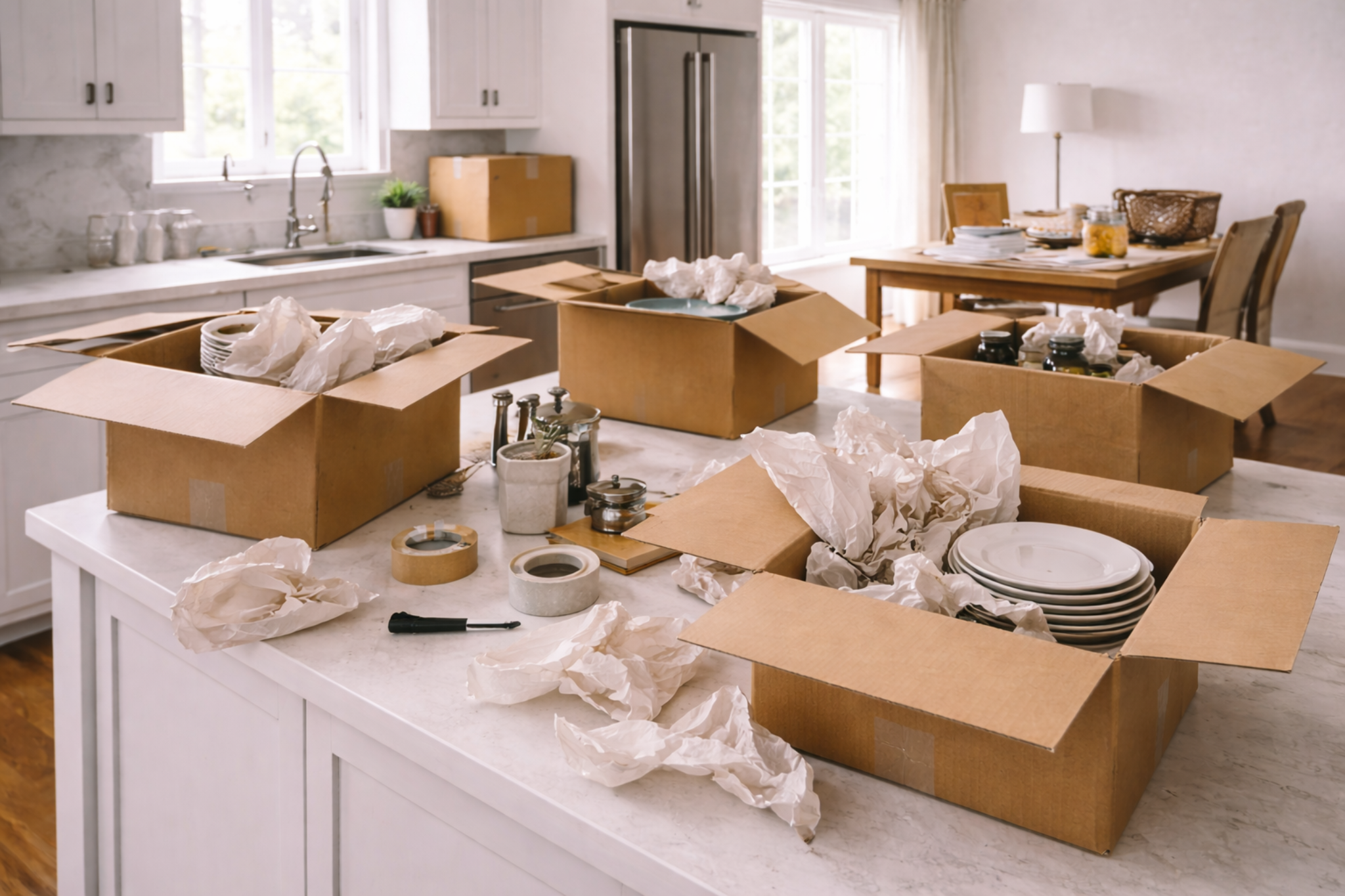
Packing spreads across too many rooms. Too many boxes stay open at once. Supplies migrate. Decisions pile up mid-task.
This creates constant context switching — packing, stopping, deciding, searching, repacking.
It looks active, but progress stalls.
The core principle of efficient packing
Efficient packing limits decisions.
That’s the difference between packing that helps the move and packing that slows it.
Professionals don’t pack everywhere at once. They work from a controlled area, finish boxes fully, and remove them from the active space.
The same principle applies whether you’re moving yourself or working with movers.
What efficient packing actually looks like
Efficient packing is built around containment.
One active packing surface. One room at a time. One box finished before the next begins.
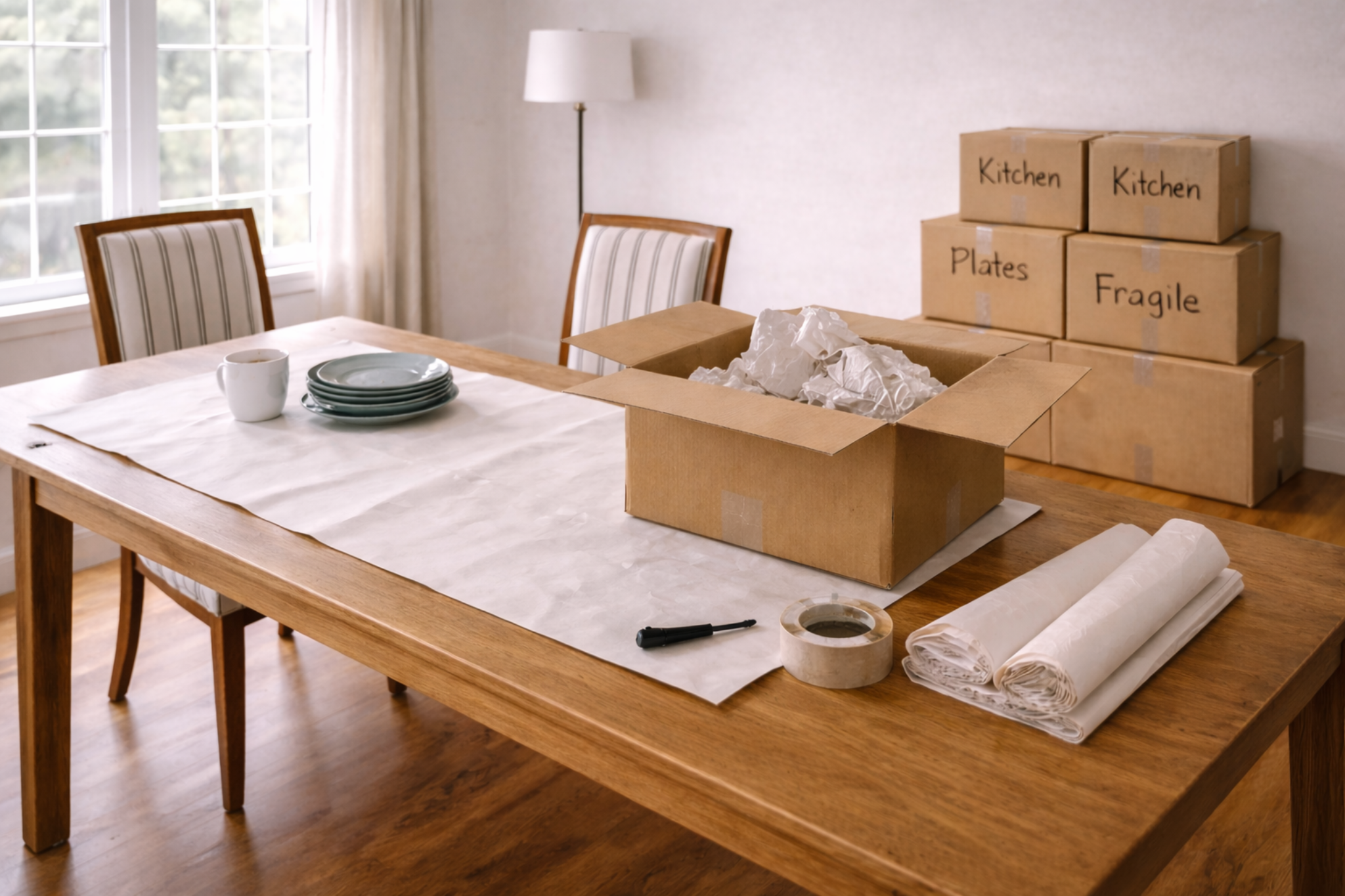
Paper is laid out before items are touched. Supplies stay within reach. Once a box is sealed and labeled, it leaves the area.
Nothing waits half-packed.
Why sealed boxes matter more than full boxes
A sealed box is a decision that’s finished.
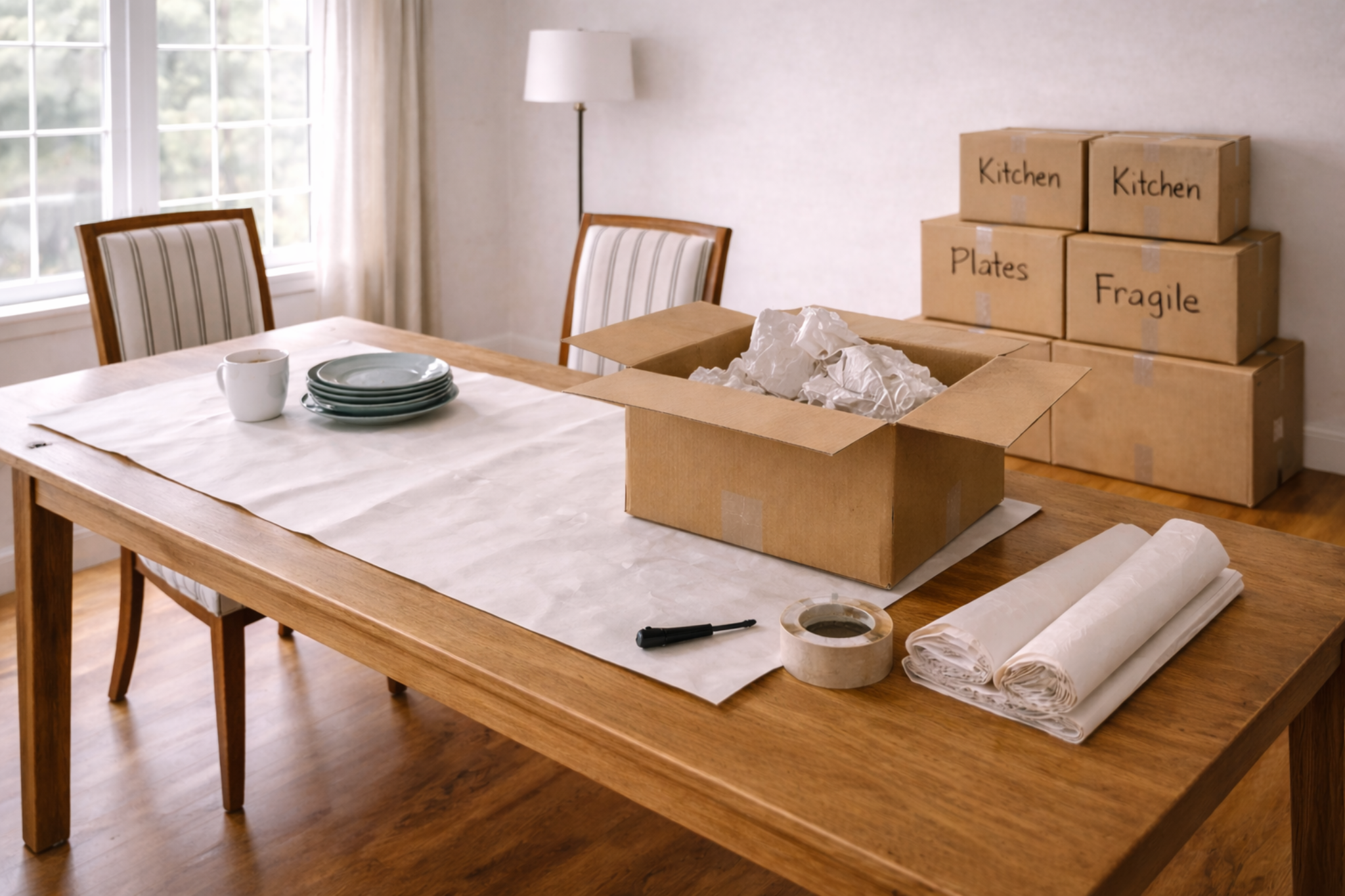
Open boxes invite revisiting, reshuffling, and second-guessing. Sealed boxes move forward without friction.
Once sealed and labeled clearly — including notes like fragile, very fragile, or heavy — movers can handle, stack, and load them correctly without stopping to ask questions.
This protects the items and preserves flow.
Packing efficiently without creating risk
Efficiency should never come from overfilling boxes or mixing incompatible items.
Heavy items belong in smaller boxes. Fragile items should be isolated, cushioned properly, and labeled clearly — not buried inside mixed boxes.
Efficient packing reduces handling. Risky packing increases it.
What to do first if you’re not sure
If packing feels chaotic, step back before adding more boxes.
Choose one room. Create one active packing area. Finish boxes completely before starting new ones.
A simple structure prevents inefficiency from compounding.
→ View the free 1-Page Move Snapshot
Closing perspective
Efficient packing isn’t about perfection.
It’s about creating enough order that the move itself stays predictable. When packing decisions are finished early, the move day has fewer questions, fewer delays, and far less wasted energy.
→ Explore the Moving Mentor System