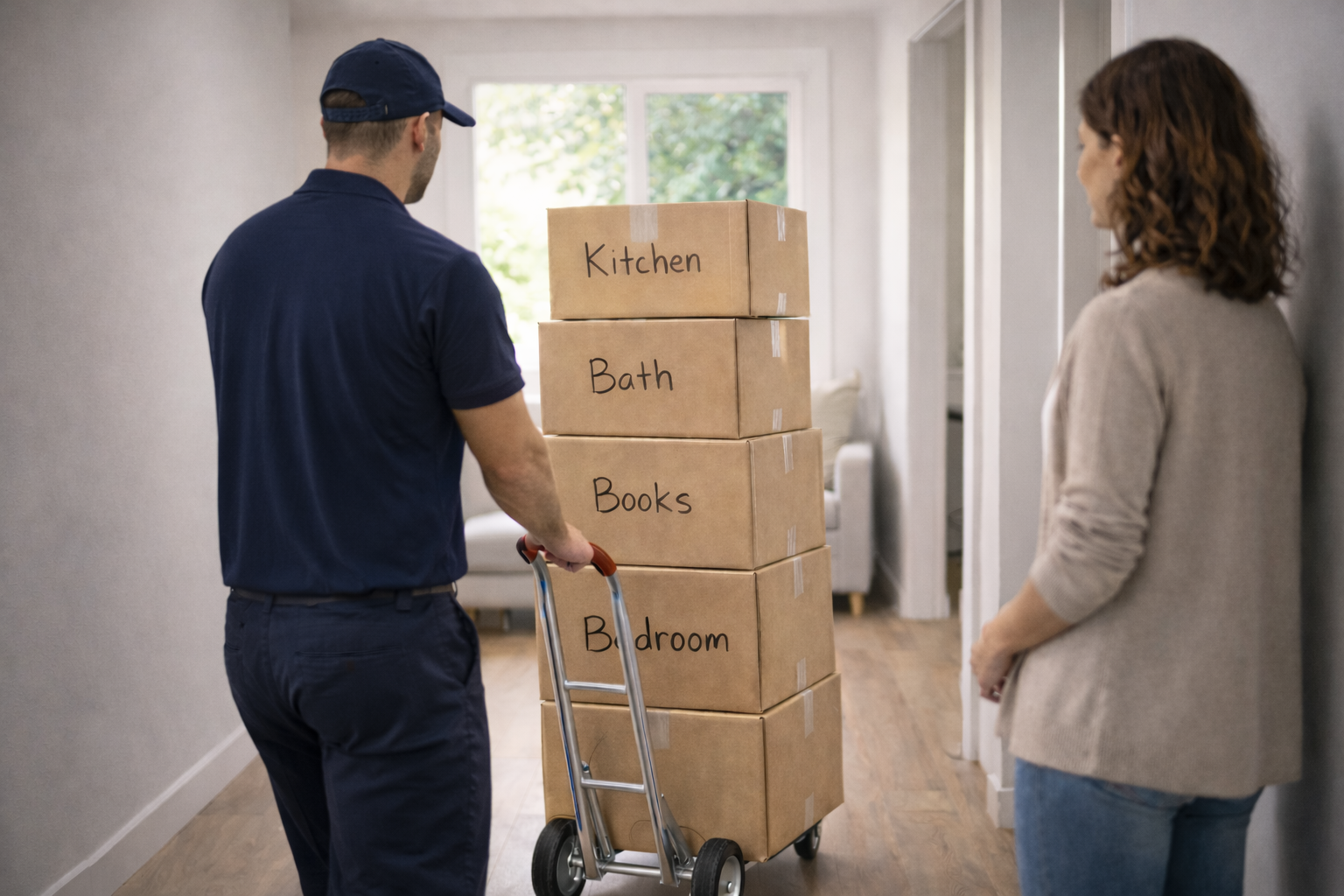
When Helping Movers Actually Slows Things Down
Movers don’t need help. They need space, flow, and alignment.
Professional movers are fully capable of completing a move on their own. Helping isn’t expected. It is appreciated when it supports the system already in motion.
Where moves slow down isn’t effort. It’s interference.
This article explains the difference between being helpful and accidentally getting in the way.
Helpful presence supports flow
The most effective way to help movers is to work around their system, not inside it.
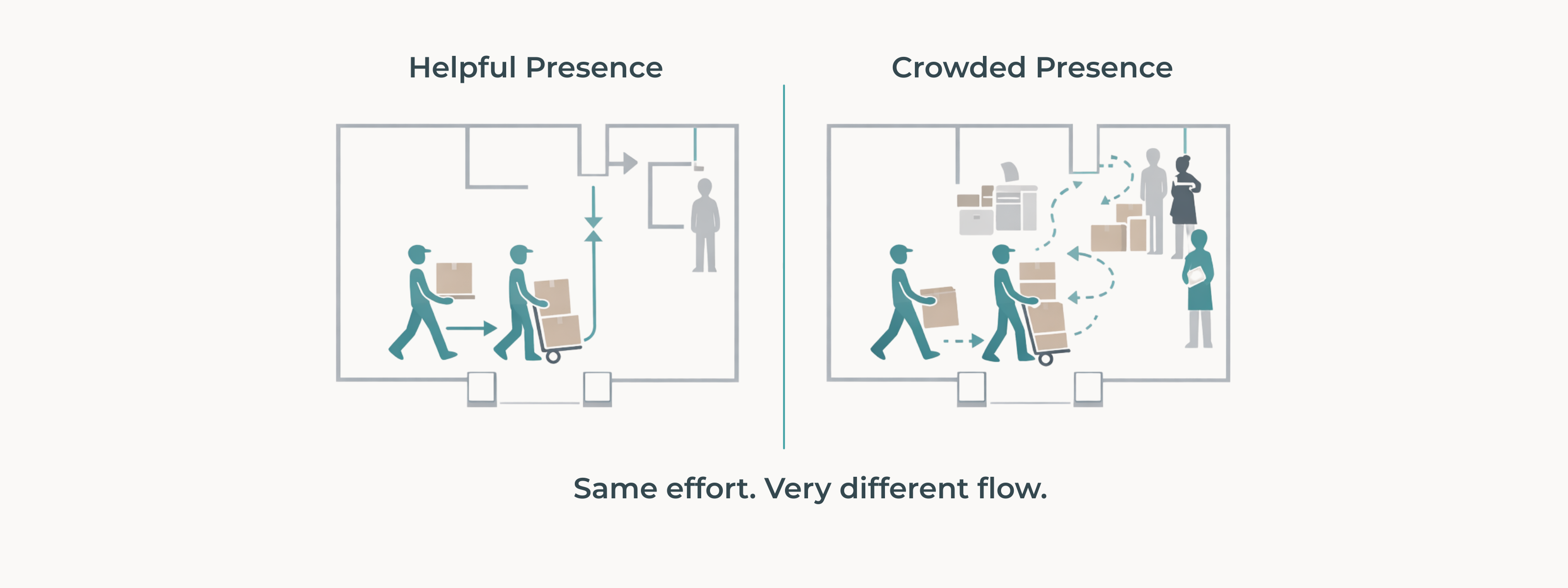
Help is genuinely useful when it removes small, time-consuming tasks, keeps paths clear, and reduces decision-making for the crew. In practice, that often means handling loose items that don’t stack well, staying near entry points so movers can get quick answers without stopping, and giving placement direction from outside the moving lane.
If you want to do something hands-on, the best timing is usually after items are placed. Unwrapping furniture, gathering packing paper, or reassembling pieces the crew has flagged as safe to do all reduce downstream work without changing the sequence.
The rule is simple: remove work for the movers, don’t create new decisions. Understanding how moving day actually works helps make this instinctive.
Crowded presence disrupts momentum
Moves slow dramatically when people operate inside the moving lane.
The biggest friction isn’t a customer carrying a lamp. It’s extra bodies in hallways and doorways, friends or family lingering in tight spaces, and parallel activity like unpacking while the move is still underway.
Each interruption forces hesitation, rerouting, or re-handling. Those slowdowns compound quickly.
The move doesn’t stop. It loses rhythm.
Support vs micromanagement
Customers are paying for a service, and movers listen to direction.
The distinction is between guiding outcomes and managing execution.
A helpful mindset is the same one you’d bring to any skilled trade. You explain what you want, then trust the professional to handle how it gets done.
With movers, clarity and trust speed things up far more than step-by-step oversight.
Help is best when it’s aligned
Every crew works a little differently. Some are comfortable with customers moving small items. Others prefer a completely clear lane.
The smoothest moves happen when expectations are aligned early. Simple questions like “Where should I stand?” or “What’s most helpful right now?” prevent hours of quiet inefficiency later.
One short conversation keeps everyone working within the same system.
The takeaway
Movers don’t expect help, but they notice when it’s done right.
The fastest moves aren’t louder, busier, or more hands-on. They’re calmer, clearer, and uninterrupted.