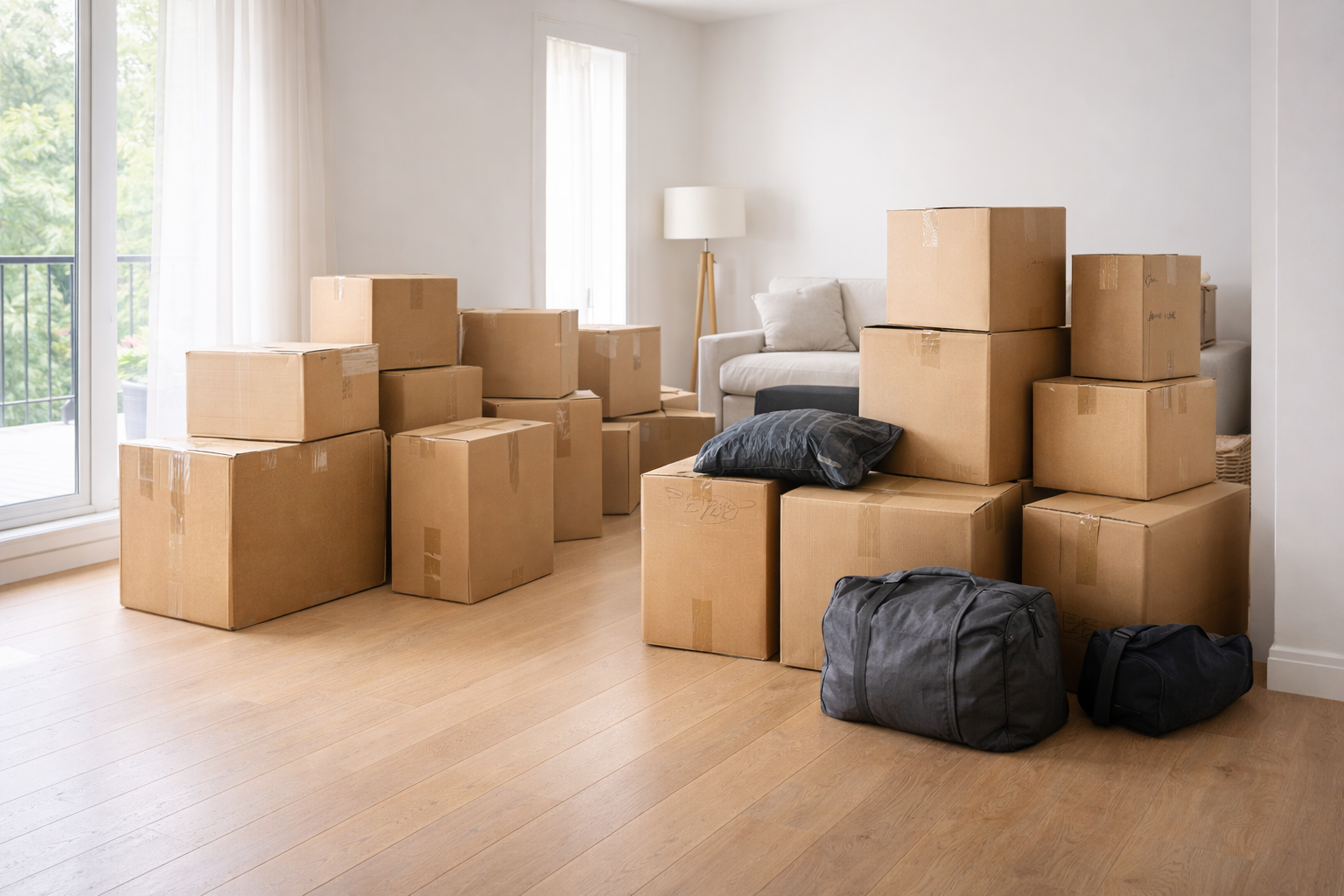
Why Packing Faster Usually Makes a Move Slower
Packing fast feels productive. Boxes disappear. Rooms look empty. Progress is visible.
But from a mover’s perspective, fast packing is often where efficiency quietly breaks down.
Moves don’t slow down because people didn’t work hard enough. They slow down because what was packed doesn’t move well.
Packing speed vs moving efficiency
Movers aren’t paid to admire neat boxes. They’re paid to move weight through space — safely and efficiently.
That efficiency depends on four things:
- Weight balance
- Stackability
- Predictability
- Flow
Fast packing often sacrifices all four. This is why packing speed rarely translates to moving speed.
Overpacked boxes don’t move faster
They move alone.
When boxes are overpacked:
- They’re too heavy to stack safely on a dolly
- Movers are forced to single-carry
- Fatigue sets in earlier
- Box failure becomes a real risk
Moves stay efficient when boxes can be stacked, rolled, and moved together — not one at a time.
Weight mismatch breaks the system
One of the most common fast-packing patterns isn’t that everything is heavy.
It’s that some boxes are far too heavy while others weigh almost nothing.
That mismatch matters.
Dollies, stair carries, and truck stacks rely on balanced loads. When weight varies wildly, movers have to slow down, re-stack, or abandon dollies entirely.
A simple fix that’s often overlooked: mix heavy items like books with light items like towels or linens.
Fast packing ignores this logic. Efficient packing depends on it.
Poor labeling stops momentum
Labeling isn’t about detail. It’s about decision speed.
The biggest delay isn’t vague labels. It’s no labels at all.
When boxes aren’t clearly labeled:
- Movers stop to ask questions
- Boxes get staged temporarily
- Items are handled more times than necessary
From a mover’s perspective, good labeling means the destination room is visible from multiple angles and movers know if a box is heavy or fragile.
Dolly efficiency is where speed is won or lost
Dollies are the engine of a move.
Fast packing often creates boxes that can’t stack cleanly, soft bags that collapse under weight, or awkward shapes that feel unstable on a dolly.
When stacks don’t feel secure, movers slow down out of necessity.
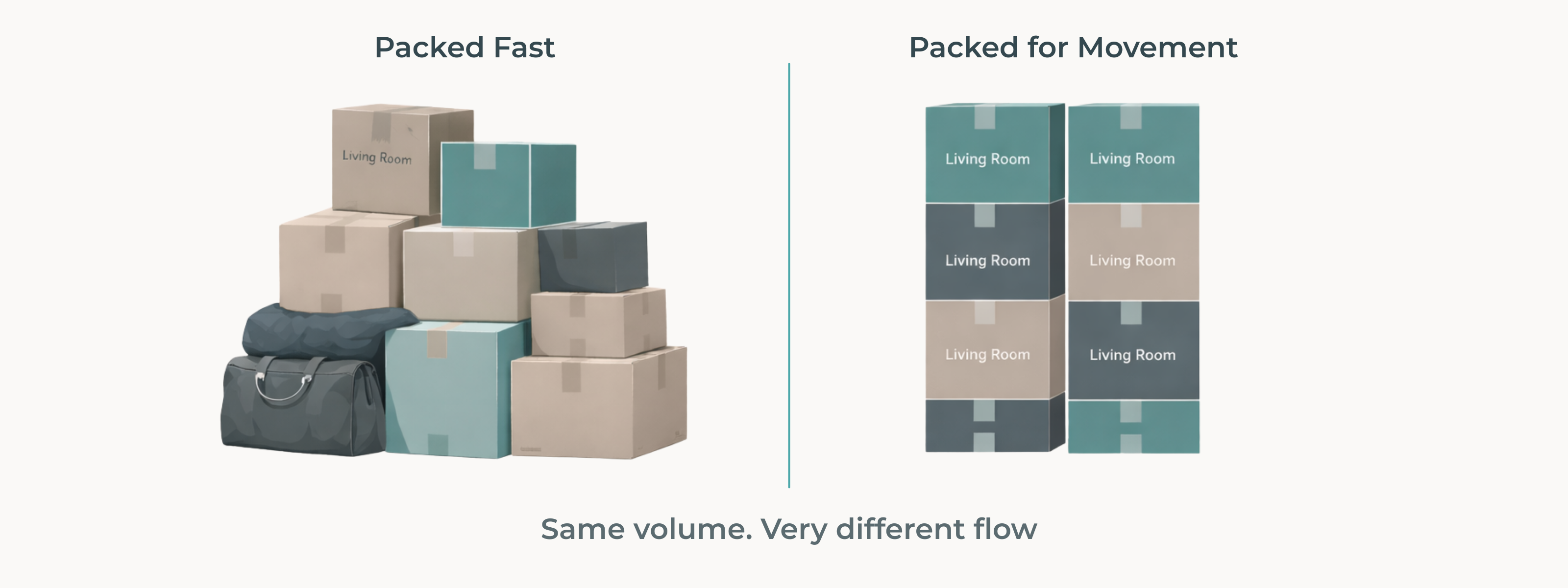
Moves don’t get slower because there’s more work. They get slower because the work stops stacking cleanly.
The real tradeoff
Packing faster doesn’t usually save time.
It shifts the cost downstream.
You might save minutes while packing, but you lose hours on move day.
Fast, disorganized packing also makes unpacking slower. Boxes arrive without clear room logic, priority items are harder to find, and setup takes longer than expected.
The most efficient moves aren’t rushed.
They’re prepared for movement.