Why Everyone Underestimates How Much Stuff They Have
Almost everyone underestimates how much stuff they have.
Not because they’re careless. Not because they’re dishonest. And not because they didn’t “look closely enough.”
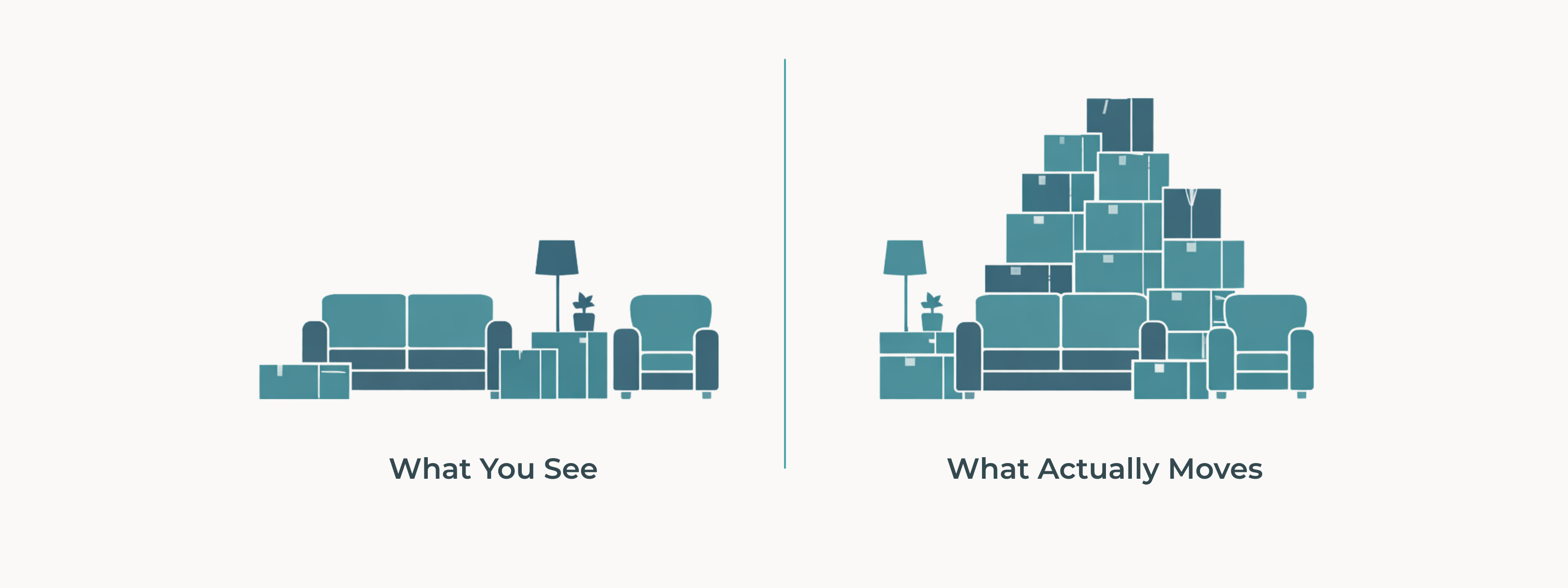
They underestimate it because volume is invisible until it moves.
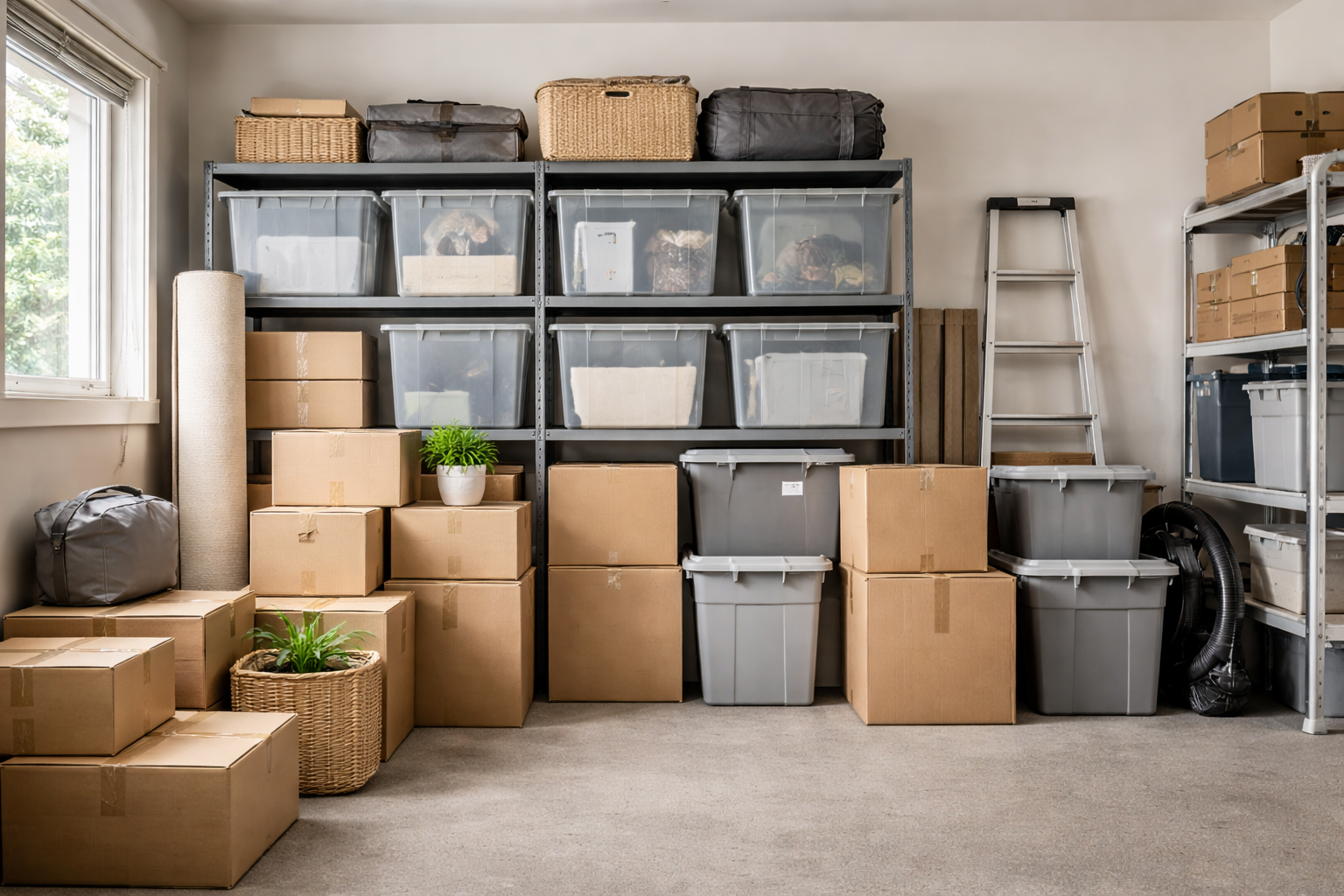
Day to day, your belongings are spread out, tucked away, and compressed into closets, drawers, storage rooms, and furniture. Moving day is the first time everything has to exist in the same place, at the same time.
This article explains why volume is so easy to misjudge, where the gaps usually come from, and how those misjudgments actually show up on moving day.
Why volume is so hard to judge
When you live in a space, volume feels manageable.
That’s because storage hides density, furniture disguises cubic space, and items are distributed across rooms instead of stacked together.
Your home works because everything has a place. A truck doesn’t work that way.
Once everything has to be loaded, stacked, and moved as a single system, volume becomes very real — very fast. This is where most people realize why volume planning matters as much as distance or packing.
The most common mistake
The most common mistake is estimating based on what you see, not what you own.
People think in terms of rooms, furniture pieces, and visible boxes.
Movers think in terms of cubic space, weight distribution, and how efficiently items can be loaded and accessed.
Those are very different ways of measuring the same home.
Where the misjudgment comes from
Estimator misses (intentional and unintentional)
When estimates are done properly and in person, outright under-reporting isn’t usually the issue.
What’s missed more often is impact, not inventory.
Two areas consistently get underestimated:
- Access and friction: Long carries, shared elevators, and tight paths don’t just slow the move. They reduce loading efficiency and increase space requirements.
- Disassembly and reassembly: Complex furniture can quietly remove a mover from the main flow for extended periods, changing how the entire day unfolds.
These factors aren’t always obvious during a walkthrough. They usually reveal themselves once the move is in motion.
Storage compresses reality
Storage is one of the biggest volume distorters.
That’s because storage and trucks work differently.
In storage, items can be packed tightly, stacked vertically, and left untouched.
In a truck, items need to be stable, balanced, accessible, and safely distributed by weight.
Something that fit cleanly into storage can take up far more space once it needs to be moved safely.
This isn’t a packing problem. It’s a physics problem.
Misjudging the new space
New homes almost always feel bigger than they actually are.
This is especially true when downsizing, moving into open layouts, or transitioning into condos and apartments.
One commonly overlooked factor is wall space.
Even when square footage is similar, fewer usable walls can limit furniture placement and make volume feel tighter once everything arrives.
When volume problems actually show up
Volume issues rarely appear late.
They usually surface when the truck fills earlier than expected, the crew’s pace slows dramatically, or conversations about second trips and extra trucks begin.
At that point, decisions become reactive instead of planned.
That’s not a failure. It’s a planning gap showing itself.
What to do first if you’re not sure
If you’re unsure about your volume, don’t guess later. Reassess earlier.
Pay special attention to storage-heavy areas, furniture that requires complex disassembly, and access constraints that affect loading efficiency.
If you want a simple way to surface hidden volume before it becomes a move-day surprise:
→ View the free 1-Page Move Snapshot
Calm reframe
Almost every move has more stuff than expected.
The problem isn’t owning things. It’s planning for less than you actually have.
When volume is acknowledged early, moving becomes calmer, smoother, and far more predictable.