When to Start Planning a Move
Most people ask this because they feel late before they even start. The date is approaching, advice online conflicts, and everything suddenly feels urgent.
The issue usually isn’t effort. It’s that planning advice rarely explains what actually needs time versus what can be done later.
This article breaks planning into clear phases so you can understand how far ahead to start — and which decisions matter early — without rigid rules or unrealistic expectations.
Why this feels hard
Moving isn’t difficult because there’s too much to do. It’s difficult because some decisions quietly limit everything that comes after them.
Dates, access approvals, elevator windows, permits, and coordination with others all shape how flexible your move can be. When those are handled late, even simple moves feel compressed.
Most people don’t realize this until the final weeks, when timing issues surface and options disappear. This is why a clear planning order matters more than working harder.
The most common mistake
The most common mistake is thinking planning begins when packing begins.
Packing is execution. Planning is setting the conditions under which packing and moving will happen.
When timing approvals or access details aren’t secured early, the final two weeks absorb all the pressure — no matter how organized someone is. This is the same reason packing faster rarely fixes a rushed move.
Step-by-step planning breakdown
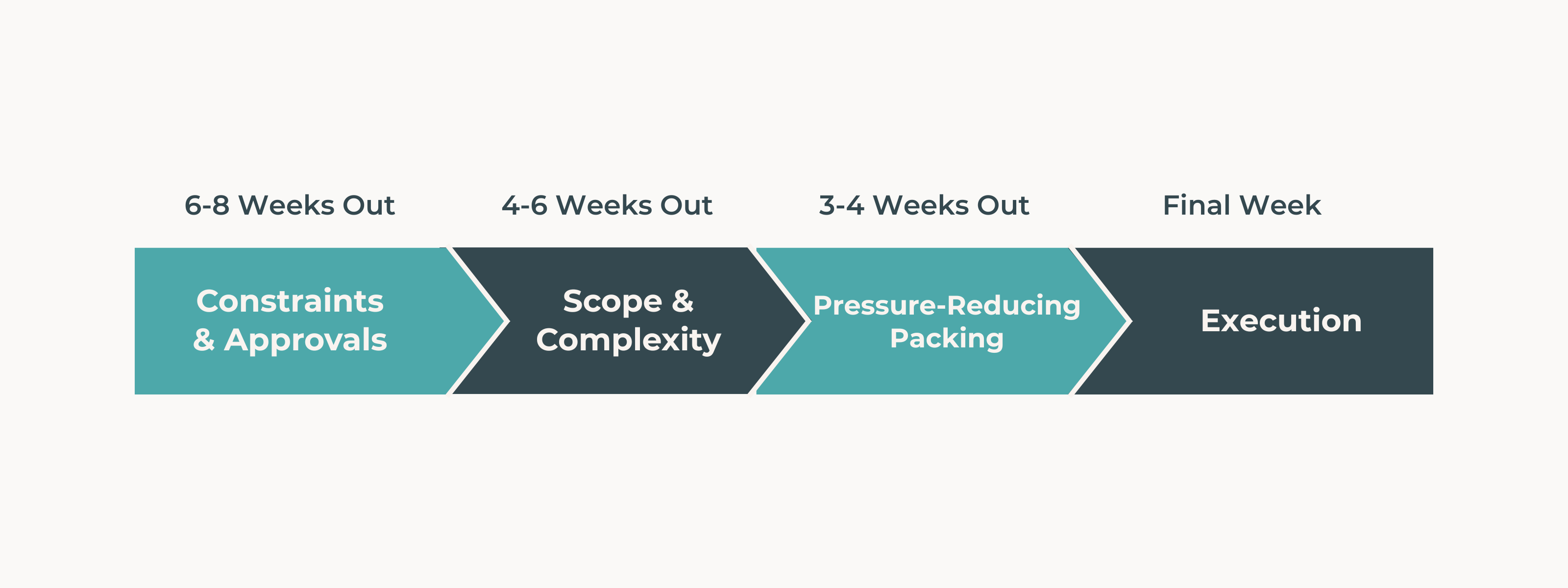
Step 1: Set the move window and constraints (6–8 weeks out)
This is when planning should begin, even if very little feels “done.”
You’re defining the container:
- Your target move date or date range
- Anything that requires approval or booking (elevators, parking, loading zones)
- Whether help will be DIY, hired, or mixed
These factors are often outside your control. That’s why they come first.
If this step is skipped, one missing approval — like an unbooked elevator — can derail the entire day. This step fits into the same phased approach used to plan a move from start to finish.
Takeaway: Early planning is about securing what you can’t control later.
Step 2: Define scope and complexity (4–6 weeks out)
Now you clarify what kind of move this really is.
This includes:
- How much you’re moving versus selling, donating, or storing
- Whether the move is single-day or spread out
- Physical constraints like stairs, long carries, or split locations
Both volume and logistics are commonly underestimated.
If this step is skipped, timelines become unrealistic and last-minute adjustments pile up. Underestimating volume is one of the most common reasons moves feel rushed.
Takeaway: Underestimating scope creates time pressure, even with help.
Step 3: Start pressure-reducing packing (3–4 weeks out)
This is when packing begins, but only for low-use items.
Focus on:
- Storage areas and seasonal items
- Decor and backups
- Anything you won’t need again before moving
The goal isn’t speed. It’s reducing how much must be done at the end.
If this step is skipped, all packing compresses into the final week when decisions are rushed. Using a simple packing system helps prevent this bottleneck.
Takeaway: Early packing protects your future time and energy.
Step 4: Lock execution details (7–10 days out)
By now, planning should mostly be complete.
This is when you confirm:
- Final access approvals and time windows
- Help coordination and arrival timing
- What stays accessible until the end
At this point, moving day should be execution, not problem-solving. Knowing how moving day actually works helps keep this phase predictable.
Takeaway: The final week should feel focused, not fragile.
When should you start planning a move?
Here’s the realistic answer, based on how moves actually unfold:
- Ideal for most residential moves: 6–8 weeks
- Comfortable minimum: 4 weeks
- Possible but challenging: 2–3 weeks
Highly complex moves benefit from more lead time. Shorter timelines can work, but they leave less margin for mistakes or delays.
The goal isn’t starting early to do more. It’s starting early enough to protect flexibility.
What to do first if you’re not sure
If everything feels vague, don’t start packing.
Start by seeing the full sequence so you know which decisions matter now versus later.
→ View the free 1-Page Move Snapshot
Calm reframe
Most moving stress comes from timing, not effort.
When approvals, access, and scope are handled early, even shorter timelines become manageable.