
How to Plan a Move (Step by Step)
Planning a move can feel overwhelming because there are so many things to think about at once. But the truth is: most of the stress comes from doing the right things in the wrong order.
A calm move comes from structuring the process — knowing what matters now and what can wait.
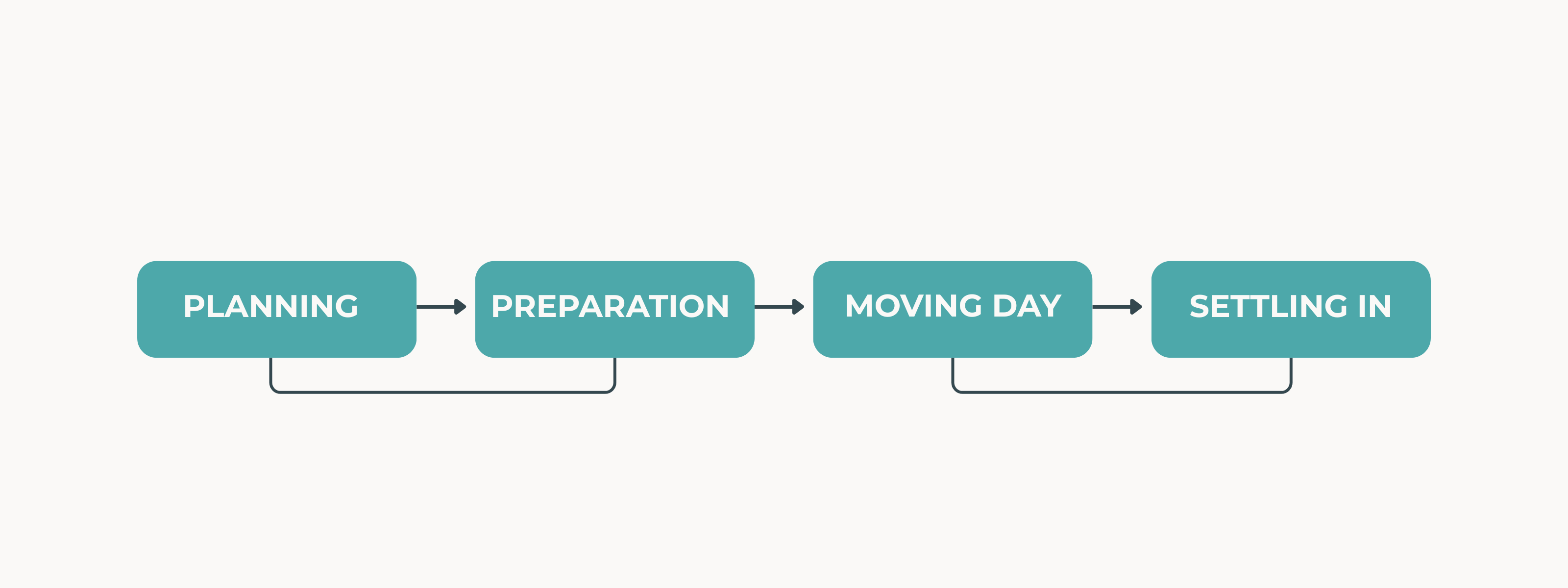
Why planning a move feels harder than it should
Most people don’t struggle because moving is physically hard.
They struggle because it creates uncertainty.
A move interrupts your routines, your space, and your sense of control. And when you don’t have a plan, everything feels urgent at once.
That’s why a move needs a system — not motivation.
The most common mistake when planning a move
The most common mistake is starting with packing.
Packing feels productive, but it’s not the first priority.
If you pack before you’ve made key decisions (timeline, access, what’s being moved, what’s being sold or donated), you create friction later. This is why packing too early causes problems.
You end up repacking boxes, wasting supplies, and creating chaos.
Planning should come before action.
Step 1: Start with planning, not packing
Before you touch a box, you need clarity on:
- Your move date (or decision window)
- What type of move you’re doing (full-service movers, hybrid, DIY)
- Your inventory: what’s moving vs what’s leaving
- Any building access factors (elevators, stairs, parking, long carries)
These decisions determine everything else.
Once you have them, packing becomes straightforward. This is where a clear planning timeline makes the rest of the move easier to manage.
Step 2: Prepare in a deliberate order
The key to a calm move isn’t packing fast.
It’s packing in the right order.
Start with:
- Items you rarely use
- Storage spaces (basement, garage, spare rooms)
- Non-essentials (seasonal items, décor, books)
Leave:
- Daily-use items
- Kitchen essentials
- Bedroom essentials
for last.
This keeps your home functional while reducing stress. A simple packing system makes this process easier to follow without overthinking.
Step 3: Treat moving day as execution, not problem-solving
Move day should be the easiest part of your move.
Not because it’s physically easy — but because every decision should already be made.
Before moving day, you should know:
- What gets moved first
- What stays accessible
- Where key items go
- Who is responsible for what
If you’re making decisions while movers are on the clock, you’ll lose time and money. Understanding how moving day actually works helps prevent this.
Step 4: Plan for settling in (yes, it matters)
Most moving plans end at unloading.
But the move isn’t over when the truck leaves.
The first 48 hours are when fatigue sets in.
That’s why you should plan for:
- First-night essentials
- Basic setup priorities (beds, bathrooms, kitchen)
- A simple unpacking order
Settling in is where your move becomes a home again.
How early should you start planning a move?
Ideally, planning begins 6–8 weeks out.
But even if you’re closer than that, the system still works.
The point isn’t to be early — it’s to be structured. Understanding when planning should actually begin matters more than hitting a perfect timeline.
Even 10 days of focused planning is better than 3 weeks of chaotic packing.
What to do first if you’re not sure where to begin
Start by getting clarity in one page.
→ View the free 1-Page Move Snapshot
Then, if you want the full system:
→ Explore the Moving Mentor System
A calm plan beats a perfect one
Moving doesn’t need to be perfect.
It needs to be predictable.
If you plan in phases, make decisions early, and prepare in the right order, the entire experience changes.
You stop reacting.
You start executing.